Grains
Roti, rice, millets (ragi, bajra), oats, poha.
Practical, home-food-based nutrition advice for babies, toddlers and growing children – weaning, picky eating, underweight and overweight – from pediatrician Dr. Neha Garg Jaiswal.
What a child eats in the early years shapes growth, brain development, immunity and lifelong food habits. In India, undernutrition and childhood obesity are both common – often in the same neighbourhood.
The goal is simple: the right food, in the right amount, at the right age – mostly cooked at home.
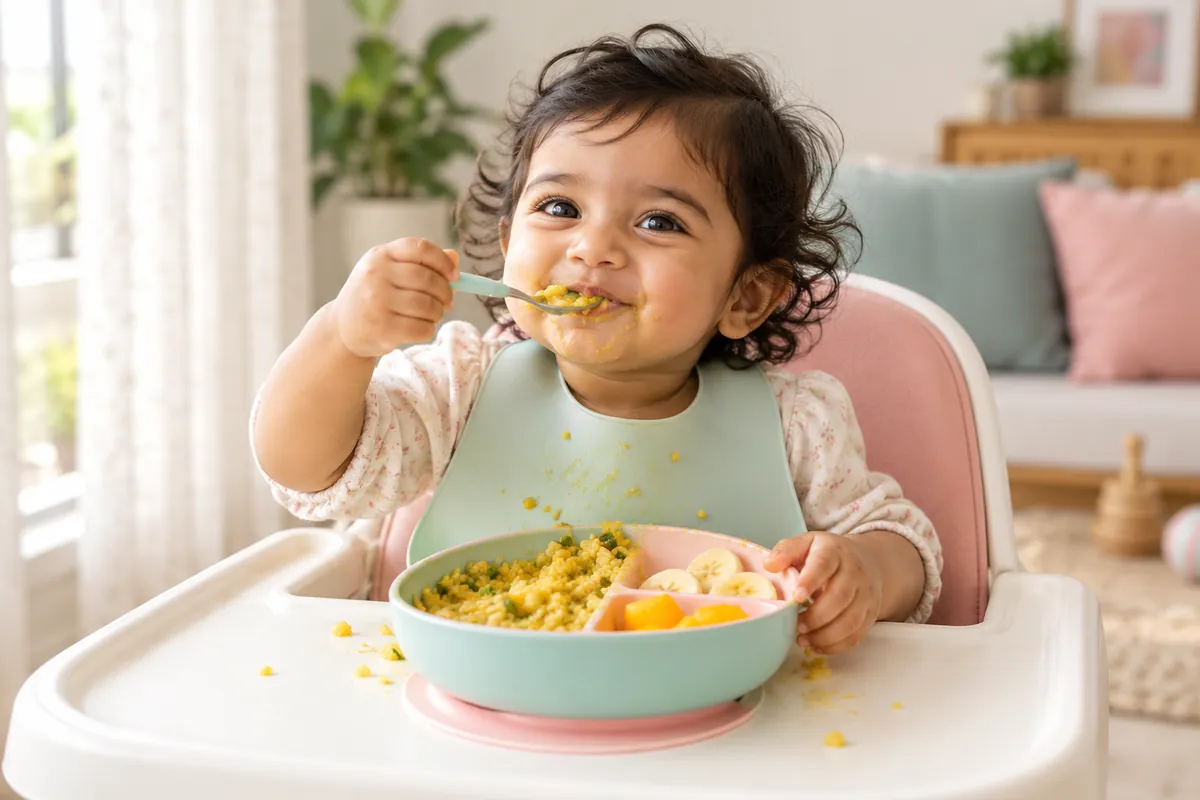
Start complementary foods at 6 months while continuing breastfeeding. Begin with soft, mashed, thick foods – not watery ones:
Introduce one new food every 2–3 days. No added salt, sugar or honey before 1 year.

| Age | Texture | Meals a day | Ideas |
|---|---|---|---|
| 6–8 months | Smooth to mashed | 2–3 + breastfeeds | Khichdi, porridge, mashed fruit and vegetables |
| 9–11 months | Finely chopped, soft finger foods | 3–4 + breastfeeds | Soft idli, upma, paneer, dal-rice, soft roti in dal |
| 12–24 months | Family food, less spice | 3 meals + 2 snacks | Roti, rice, dal, sabzi, curd, egg, fruit |
Roti, rice, millets (ragi, bajra), oats, poha.
Dal, rajma, chana, paneer, curd, eggs, fish, chicken.
Different colours every day; whole fruit over juice.
Milk, curd and paneer – but not so much milk that meals are skipped.
Ghee or oil in small amounts; powdered nuts and seeds for little ones.
Instead of juices, soft drinks and packaged “health drinks”.
Fussy eating peaks between 2 and 5 years and is usually normal. What helps:
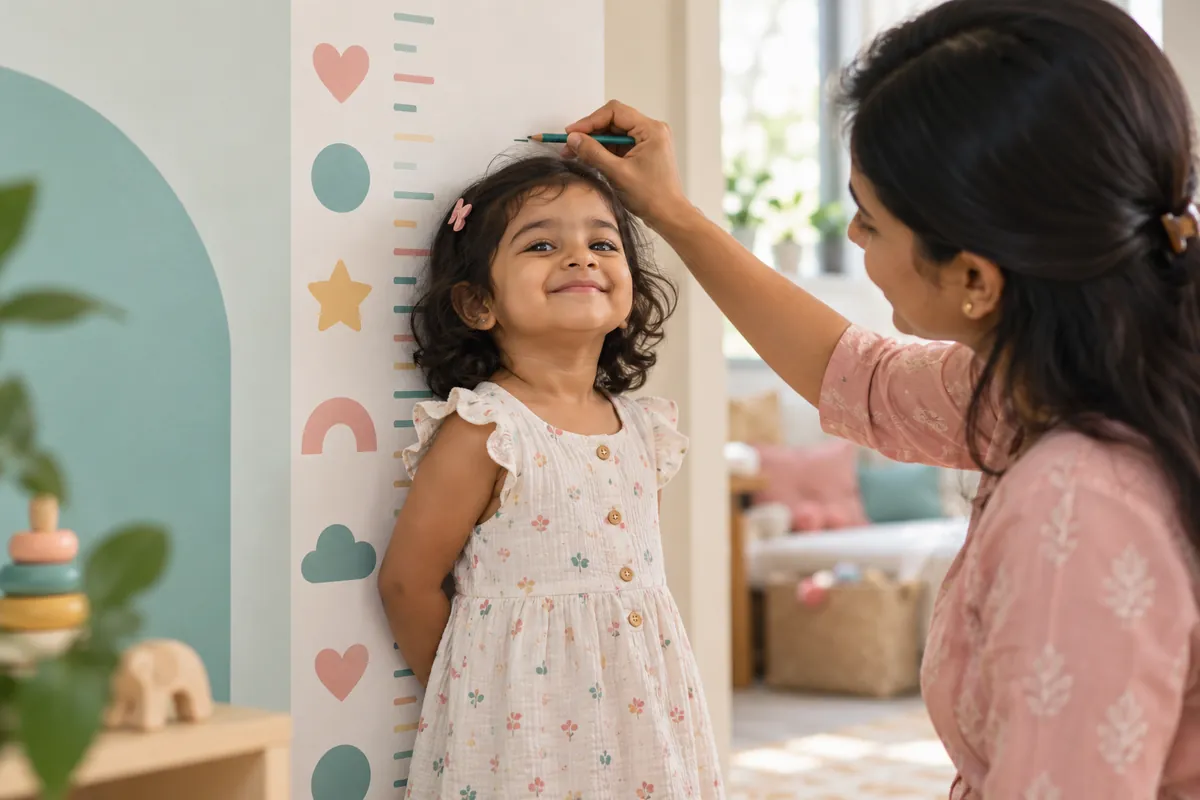
Underweight: common causes include small, infrequent meals, too much milk or juice that kills appetite, frequent infections and worms. Dr. Neha reviews growth charts and diet, checks for anaemia and gives a realistic, calorie-dense home-food plan.
Overweight: packaged snacks, sugary drinks, screens and less outdoor play are the main drivers. The focus is family habits, not dieting – water instead of sweet drinks, home-cooked meals, 60 minutes of active play daily and fixed screen limits.

Iron deficiency is very common in Indian children and affects energy, attention, learning and immunity. Too much cow’s milk is a frequent cause in toddlers.
Iron-rich foods include green leafy vegetables, dals, rajma, chana, jaggery, eggs and meat. Pair them with vitamin C foods such as lemon, amla or orange for better absorption. Supplements only when advised after a check.
In an emergency, go to the nearest hospital straight away. For guidance, call or WhatsApp +91 98184 07725.
Short, clear answers to the questions parents ask Dr. Neha most often. Your own child’s situation is always best discussed in person.
Ask on WhatsAppAt 6 months. Starting before 4 months or after 7 months is not advised.
Not as the main drink before 1 year. After 1 year, limit milk to about 400–500 ml a day so your child still eats meals.
A little salt in family food is fine after 1 year. Keep added sugar low, especially in drinks.
Usually not, if growth is normal. Keep offering variety without pressure, and get a check if weight is falling.
Yes – diet reviews and weaning plans work well over video, with clinic visits for measurements.

MBBS, MD (Paediatrics) · Pediatrician & Neonatologist
Dr. Neha is a pediatrician and neonatologist with 15+ years of clinical experience, including newborn and paediatric care at Dr. Ram Manohar Lohia Hospital, Chacha Nehru Bal Chikitsalaya, ESIC Hospital Noida, Cloudnine and Yashoda. She consults at her clinics in Noida Sector 76 and Greater Noida West, and online.
Weaning, fussy eating, weight or anaemia – practical home-food advice in Noida, Greater Noida West or online.
In-clinic in Noida Sector 76 or Greater Noida West, or an online video consultation from home. Share a few details and the clinic will call or WhatsApp you to confirm a slot.