Acne
Gentle face washing twice a day, no squeezing, oil-free products. Persistent or scarring acne deserves treatment – it affects confidence.
A safe, respectful space for teenagers to talk about growth, puberty, periods, skin, weight and stress – with Dr. Neha Garg Jaiswal, who keeps parents involved while respecting a teen’s privacy.

Adolescence brings the fastest changes since infancy: a growth spurt, puberty, new pressures and new habits. A pediatrician who has known your child since childhood understands their history and can guide both the teen and the parents.
Teens are offered some time to speak privately, and parents stay involved in every important decision.
| Girls | Boys | |
|---|---|---|
| Usual start | 8 to 13 years | 9 to 14 years |
| First sign | Breast development | Testicular growth |
| Growth spurt | Early in puberty | Later in puberty |
| Other changes | Periods about 2 years after breast development; body hair; acne | Voice change, facial and body hair, acne |
Irregular periods are common in the first 1 to 2 years. Polycystic ovary syndrome (PCOS) can show up in the teen years with irregular periods, acne, excess facial or body hair and weight gain. Early lifestyle changes make a real difference, and Dr. Neha coordinates with a gynaecologist or endocrinologist when needed.
Gentle face washing twice a day, no squeezing, oil-free products. Persistent or scarring acne deserves treatment – it affects confidence.
More protein, calcium and iron in the growth spurt; fewer packaged snacks, energy drinks and late-night eating.
At least 60 minutes of physical activity daily and 8 to 10 hours of sleep, with screens out of the bedroom.
Mood swings are normal in adolescence, but persistent sadness, withdrawal, anger, sleep changes or falling grades may signal anxiety or depression. Exam stress, social media and peer pressure all play a part.
Dr. Neha listens without judgement and connects families to counsellors when needed. If a teenager talks about self-harm or not wanting to live, seek help immediately – India’s free mental-health helpline Tele-MANAS is available on 14416.
Parent and teen share the main concern together.
A few minutes for the teen to talk to Dr. Neha alone, in confidence.
Growth, puberty stage and a respectful physical check.
Treatment, lifestyle steps and follow-up agreed with both.
In an emergency, go to the nearest hospital straight away. For guidance, call or WhatsApp +91 98184 07725.
Short, clear answers to the questions parents ask Dr. Neha most often. Your own child’s situation is always best discussed in person.
Ask on WhatsAppUntil 18 years of age.
Yes, in the first 1 to 2 years after periods start. Beyond that, or with very heavy bleeding, get checked.
Between 8 and 13 years in girls and 9 and 14 years in boys.
Yes. Teens are offered some private time during the visit, and parents are kept involved in decisions.
Yes. It is a well-studied vaccine that protects against cervical and other HPV-related cancers, best given between 9 and 14 years.

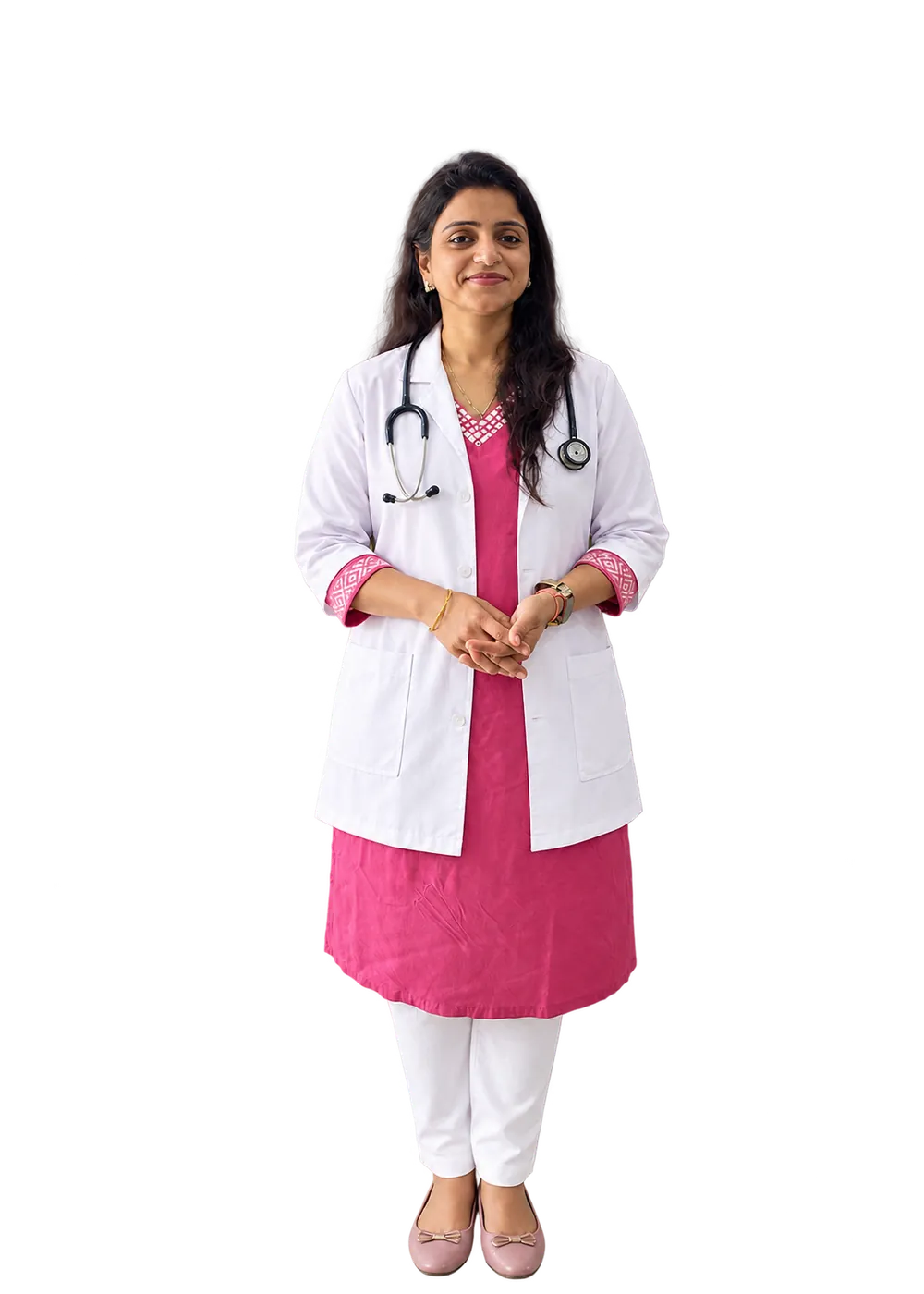
MBBS, MD (Paediatrics) · Pediatrician & Neonatologist
Dr. Neha is a pediatrician and neonatologist with 15+ years of clinical experience, including newborn and paediatric care at Dr. Ram Manohar Lohia Hospital, Chacha Nehru Bal Chikitsalaya, ESIC Hospital Noida, Cloudnine and Yashoda. She consults at her clinics in Noida Sector 76 and Greater Noida West, and online.
Puberty, periods, skin, weight or stress – a respectful consultation in Noida, Greater Noida West or online.
In-clinic in Noida Sector 76 or Greater Noida West, or an online video consultation from home. Share a few details and the clinic will call or WhatsApp you to confirm a slot.